Home · Services · Lighting & Ceiling Fan Installation
Lighting & Ceiling Fan Installation in Fort Pierce, FL
Quick answer
Lighting and fan work in Fort Pierce with box ratings verified and porch damp ratings respected.
Ceiling fans in Fort Pierce are structural appliances: boxes must be fan-rated, and porch and lanai fittings need damp ratings. Salt air corrodes outdoor fixtures on the lagoon's schedule.
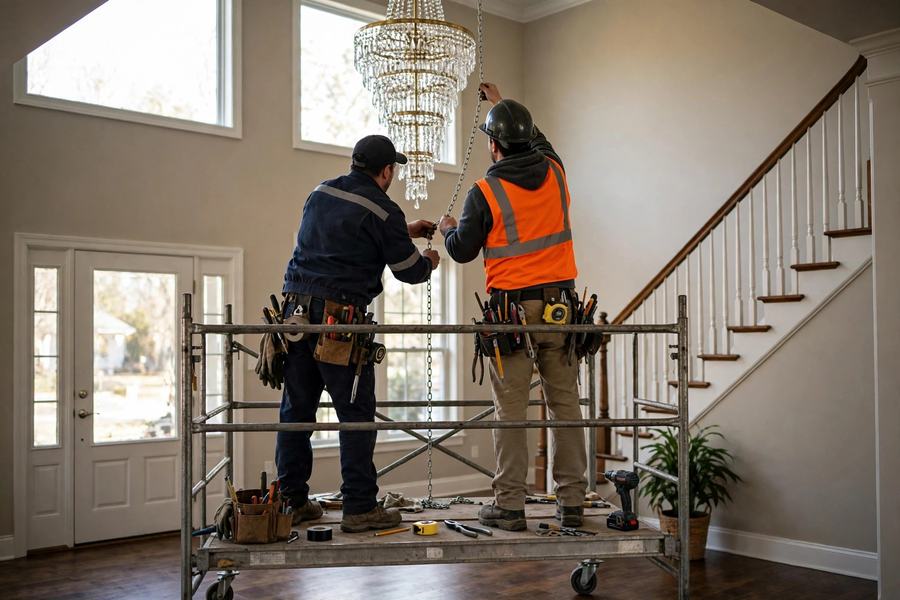
Signs you need lighting & ceiling fan installation
- A fan that wobbles, hums, or hangs from a box never meant to hold it
- Rooms lit by one tired ceiling fixture and a plan for recessed lighting
- Exterior lighting for a dark entry, dock, or lanai
- Fixtures flickering on a circuit that tests sound (a fixture fault, not a wiring fault)
- A chandelier or high ceiling fixture beyond ladder and comfort
What the job involves
What affects the price
- Fixture count and ceiling height and access
- Whether new switching or only fixture swaps are in scope
- Fan rated box installation where the existing box is not rated
- Exterior runs and any trenching or conduit for landscape and dock lighting
When it is an emergency
Lighting is scheduled work, except where the fault is the circuit rather than the fixture: flicker across multiple fixtures, heat at a switch, or a breaker involved moves the job to the repair pages. A fan that drops its speed settings or reverses randomly is usually a control or receiver fault, a part level fix, not a new fan.
PLACEHOLDERLighting & Ceiling Fan Installation across the Fort Pierce area
Related services
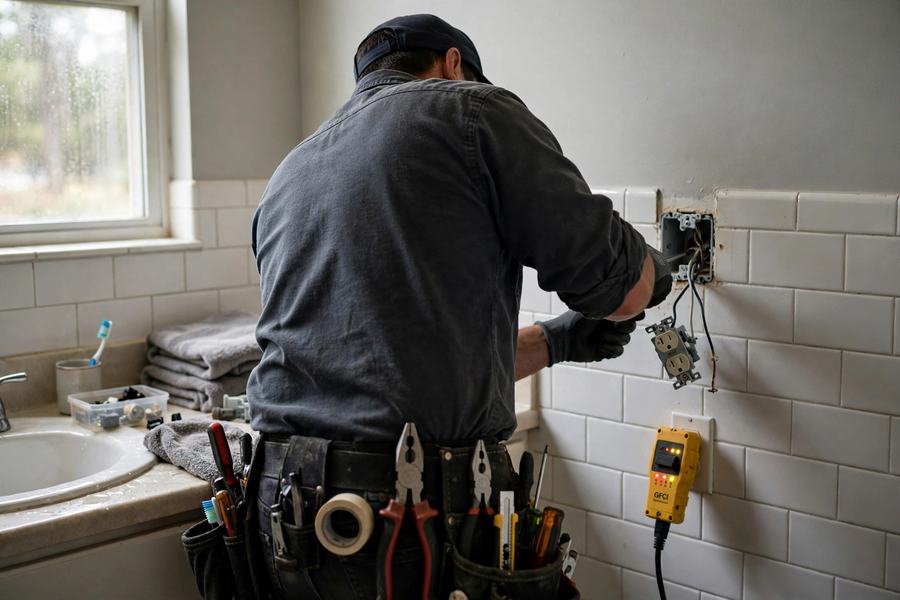
Emergency Electrical Repair
Emergency electrical repair in Fort Pierce triaged by hazard, heat and scorch treated as stop signs.
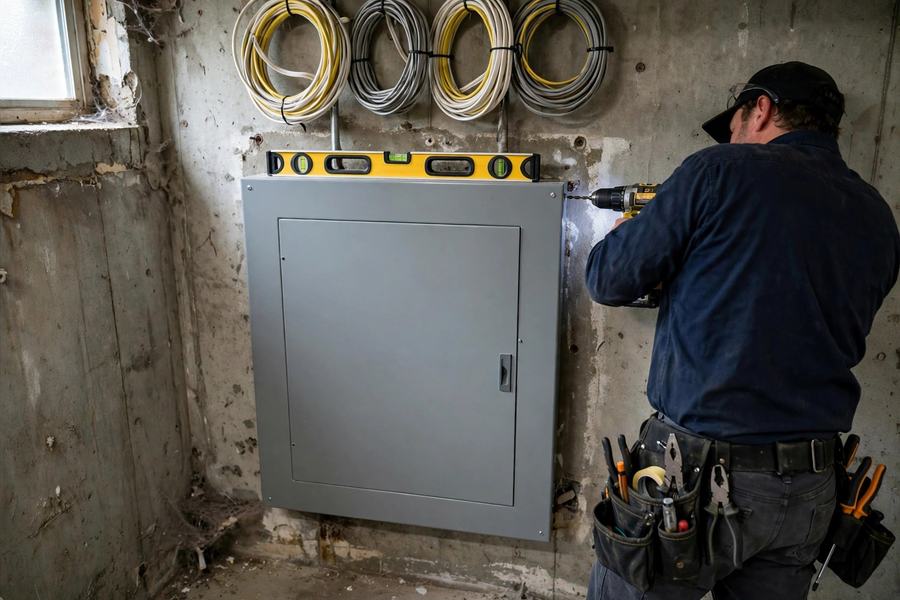
Breaker Panel Replacement & Upgrades
Panel replacement in Fort Pierce from a shown load calculation, old-grid services through 1970s panels.
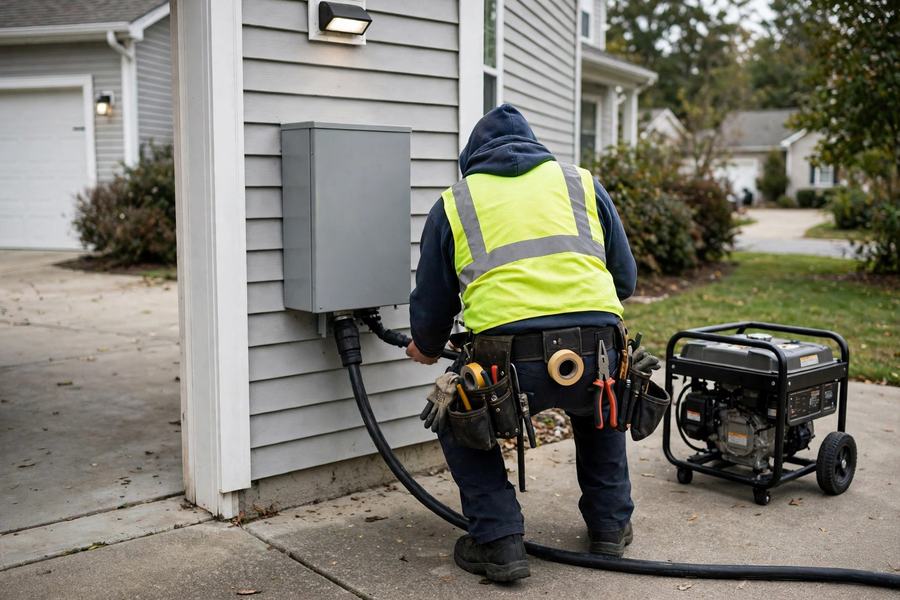
Generator Hookup & Installation
Generator hookups in Fort Pierce installed in the calm months, circuits listed, backfeed impossible by design.
Whole-Home Surge Protection
Surge protection in Fort Pierce sized to the Treasure Coast's lightning reality, limits stated plainly.
Lighting & Ceiling Fan Installation questions, answered
When is lighting & ceiling fan installation an emergency?
Lighting is scheduled work, except where the fault is the circuit rather than the fixture: flicker across multiple fixtures, heat at a switch, or a breaker involved moves the job to the repair pages. A fan that drops its speed settings or reverses randomly is usually a control or receiver fault, a part level fix, not a new fan.
What affects the price of lighting & ceiling fan installation in Fort Pierce?
The main price factors for lighting & ceiling fan installation are covered in the cost section above. The contractor confirms the exact price in a written estimate after seeing the job, and nothing is owed until you approve it. The call and the referral are free.
What is the safe way to run a portable generator for my Fort Pierce home?
Through an interlock kit or a transfer switch, full stop. Both connect the generator to chosen circuits through the panel and mechanically prevent power from ever flowing backward onto the street, where it can injure or kill a line worker restoring your neighborhood. Published guides put the hookup at $500 to $1,500 installed depending on method and distance. The two fatal shortcuts are the dryer outlet backfeed cord and running the generator in a garage; outage season produces carbon monoxide deaths every year from the second one alone. Generator outside, 20 feet from windows, feeding an inlet: that is the whole safe pattern.
My GFCI outlet keeps tripping. Is it the outlet or something real?
Both are possible and the order of suspicion matters. A GFCI that trips with nothing plugged in and will not hold a test is often a tired device, and replacement settles it. A GFCI that trips when a specific appliance runs, or after rain at outdoor and dock locations, is reporting ground leakage from that appliance or water in a box, which is the device doing its exact job. At docks and pools, treat every trip as real until an assessment says otherwise, and keep people out of the water near a faulting circuit.
My home has aluminum wiring. Do I need to rewire the whole house?
Not automatically, and anyone who says so without opening devices is skipping the assessment. Aluminum branch wiring from the late 1960s and 1970s fails at connections, not mid-run, and the approved remedies work at the connections: devices rated for aluminum, or copper pigtails with listed connectors installed by an electrician, at a fraction of whole house rewiring. The evidence that decides is at the devices: overheated, discolored, or loose aluminum connections argue for the full remedy program; clean, tight, properly rated connections argue for a monitored plan. Get the device level findings in writing either way.
Request a callback
Prefer to talk later? Leave your details and an independent local pro will call you back. No charge to you, no obligation.
Indian River Electric is a free referral service. Submitting this form connects you with independent local contractors who provide the work.